How to Choose the Best Roofing Material for Your Texas Home
When it’s time to replace your roof, one of the biggest decisions you’ll make is what to put back on.
For many North Texas homeowners, asphalt shingles may be the first option that comes to mind—but they’re far from the only one. Today’s roofing materials range from traditional composition shingles to synthetic slate and shake, concrete tile, natural slate, standing seam metal, and stone-coated steel. Each comes with its own advantages, appearance, price point, and expected lifespan.
And in Texas, choosing a roofing material isn’t simply about deciding what looks best on your home.
Our roofs have to contend with intense UV exposure, triple-digit summer temperatures, high winds, severe thunderstorms, and the hailstorms North Texas is known for. At the same time, your roof makes up a significant portion of your home’s exterior appearance and can be one of the largest investments you make in the property.
That means choosing the right roofing material often comes down to balancing several factors:
- Aesthetics
- Initial cost
- Expected lifespan
- Hail and wind performance
- Maintenance requirements
- Weight and structural considerations
- Insurance implications
- Long-term value
It’s also worth considering whether you want to replace your roof with a similar material or use the opportunity to upgrade to a different roofing system altogether.
After more than 37 years of installing roofing systems across North Texas, we’ve learned that there isn’t one roofing material that’s right for every home or homeowner. Your home’s architecture and structure, your budget, how long you plan to own the property, your insurance coverage, and what you ultimately want out of your next roof should all factor into the decision.
Below, we’ll compare some of the most common roofing materials available to Texas homeowners—including stone-coated steel, composition asphalt shingles, steel shingles, synthetic slate and shake, standing seam metal, natural slate, concrete tile, and clay tile—and look at the advantages, tradeoffs, and considerations of each.
1. Stone-Coated Steel
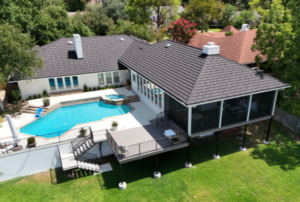
Stone-coated steel occupies an interesting space in the roofing market because it combines the strength and longevity associated with steel roofing with the appearance of more traditional materials.
The system begins with a steel core that’s formed into panels and covered with protective coatings, stone granules, and an overglaze. Depending on the profile, the finished roof can resemble dimensional shingles, wood shake, or traditional tile.
For homeowners who like the performance characteristics of metal but don’t necessarily want their home to look like it has a metal roof, stone-coated steel can be an excellent middle ground.
Why Has Stone-Coated Steel Become Popular in North Texas?
Durability is a major reason.
Many stone-coated steel systems achieve a Class IV impact rating and perform extremely well in hail-prone environments. Extremely large hail can still cause cosmetic denting, but in more than three decades of installing these systems in North Texas, we’ve seen firsthand why homeowners seeking long-term durability continue to consider them.
They’re also significantly lighter than concrete tile and natural slate, despite being able to recreate many of those same architectural styles.
Stone-coated steel does require a larger upfront investment than conventional asphalt shingles. But homeowners evaluating the cost should consider more than the initial price—they should also look at expected lifespan, maintenance, insurance considerations, and how many future roof replacements the system could potentially eliminate.
Best suited for: Homeowners who want the durability of steel with the appearance of shingles, shake, or tile.
2. Composition/Asphalt Shingles
When most homeowners picture a residential roof, they’re probably picturing a composition shingle.
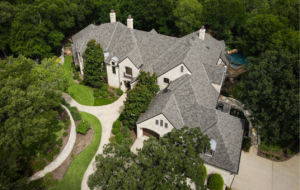
Asphalt shingles remain the most widely used residential roofing material in North Texas, and for good reason. They’re relatively affordable, available in an enormous range of colors and styles, and can be installed on many different types of homes.
Today’s asphalt shingle market also gives homeowners considerably more choice than it once did. Options range from traditional architectural shingles to designer products intended to replicate the dimensional appearance of shake, slate, or other premium materials.
How Do Asphalt Shingles Perform in Texas?
The biggest consideration in North Texas is hail.
Traditional asphalt shingles can sustain granule loss, bruising, cracking, and other damage during severe hailstorms. Homeowners looking for additional impact resistance can consider Class 4 impact-rated shingles, although no asphalt shingle should be considered hail-proof.
The tradeoff is cost versus expected service life. Asphalt generally provides a lower barrier to entry than premium roofing systems, but it typically won’t offer the same potential longevity as slate, tile, or metal.
With so many shingle manufacturers and product lines available, we’ve also learned that manufacturer selection matters. Over the years, we’ve watched roofing products enter and leave the market, which is why Joe Hall Roofing focuses on established manufacturers with strong product offerings and warranty programs, including GAF, CertainTeed, Owens Corning, and Atlas.
Best suited for: Homeowners looking for versatility, broad aesthetic choice, and a comparatively accessible upfront investment.
3. Steel Shingles
For homeowners interested in the durability and longevity of metal but who prefer the familiar appearance of a traditional shingle roof, steel shingles offer another compelling option.
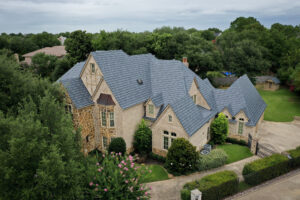
Unlike standing seam metal, which uses long vertical panels, steel shingle roofing is manufactured in smaller panels designed to recreate the dimensional appearance of traditional roofing materials. Depending on the product and profile, these systems can provide the look of architectural shingles, shake, or slate while gaining many of the performance benefits associated with steel.
How Do Steel Shingles Perform in Texas?
Steel shingles are particularly well suited for homeowners looking for greater long-term durability in the demanding North Texas climate. They can provide excellent resistance to high winds, intense UV exposure, fire, and severe weather while avoiding many of the aging characteristics associated with asphalt-based roofing products.
Hail is an important consideration with any metal roofing system. Severe hail can potentially leave cosmetic dents or markings on steel roofing without necessarily compromising the roof’s ability to shed water. Because insurance policies may distinguish between cosmetic and functional damage to metal roofing, it’s important to understand how your policy addresses metal before making the switch.
Steel shingles are also relatively lightweight, which allows homeowners to achieve a premium roofing appearance without the structural weight associated with materials such as natural slate or concrete tile.
At Joe Hall Roofing, we install EDCO steel roofing systems, which provide homeowners with several styles and finishes designed to replicate traditional roofing materials while offering the durability of steel.
The initial investment is typically higher than a conventional asphalt shingle roof, but the conversation shouldn’t stop at upfront cost. Expected lifespan, maintenance, weather performance, insurance considerations, and the possibility of avoiding multiple future roof replacements should all be considered when comparing the long-term value of the system.
Best suited for: Homeowners who want the familiar appearance of shingles, shake, or slate while upgrading to the durability and longevity of a steel roofing system.

4. Synthetic Slate & Shake
Synthetic roofing gives homeowners the opportunity to recreate the appearance of natural slate or wood shake without some of the weight, maintenance, and structural considerations associated with the materials they’re designed to replicate.
These products are generally manufactured from engineered polymers or composite materials and can be produced in a wide variety of colors, profiles, and blends.
Why Consider Synthetic Roofing in Texas?
Quality synthetic roofing products can offer strong resistance to impact, wind, moisture, and UV exposure, making them particularly interesting in the North Texas climate.
They’re also considerably lighter than natural slate.
That can open the door to a slate-inspired appearance on homes where the structure may not be designed to support the weight of a traditional slate roof.
However, the manufacturer matters.
We’ve seen numerous synthetic roofing products come and go over the past several decades. A long lifespan isn’t very valuable if the manufacturer isn’t around to support its product or warranty years down the road.
That’s one reason we place so much emphasis on working with established manufacturers and products with a proven track record.
Best suited for: Homeowners who want the appearance of slate or shake with less weight and strong weather-performance options.

5. Natural Slate
Few roofing materials can replicate the appearance, character, and longevity of genuine slate.
When properly selected and installed, a natural slate roof can last for generations. Depending on the slate itself and the roofing assembly, service lives of 75, 100, or even more years are possible.
Slate is also naturally fire resistant and isn’t susceptible to many of the aging characteristics associated with asphalt-based roofing products.
But installing a slate roof is very different from installing shingles.
What Should Texas Homeowners Know About Slate?
Weight is one of the first considerations. Natural slate is significantly heavier than asphalt shingles, meaning the home’s structure must be evaluated to determine whether it can support the roofing system.
Installation expertise is equally important.
Slate requires specialized knowledge of material selection, layout, flashing, fastening, and repair. Walking on a slate roof incorrectly can even damage individual pieces.
While slate is extremely durable, individual pieces can still crack or break from severe impacts. The ability to properly repair the system over its very long service life is therefore an important part of ownership.
Natural slate generally represents a significantly larger upfront investment, but for the right home and homeowner, its lifespan and timeless appearance put it in a category of its own.
Best suited for: Homeowners prioritizing architectural authenticity, exceptional longevity, and a premium natural roofing material.
6. Concrete Tile
Concrete tile is another long-lasting roofing option that has been used extensively throughout Texas.
One of its biggest advantages is design versatility. Depending on the profile, concrete tile can complement everything from Mediterranean and Spanish architecture to contemporary homes.
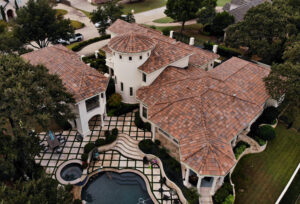
Mediterranean-Style Concrete Tile
Barrel and S-profile tiles create the curved appearance commonly associated with Mediterranean, Spanish, and Southwestern architecture.
Beyond aesthetics, concrete tile provides excellent durability and fire resistance. The roofing assembly can also help manage heat transfer into the structure—an important consideration during a Texas summer.
Flat Concrete Tile
Flat profiles offer many of the same material advantages while creating a much different appearance. Depending on the product, they can resemble slate, shake, or provide a clean contemporary roofline.
As with natural slate, weight must be considered before installing concrete tile. The roof structure needs to be capable of supporting the system.
Concrete tile can also be broken by severe impacts or improper foot traffic, making experienced installation and maintenance particularly important.
Best suited for: Homeowners seeking a distinctive architectural appearance, durability, and a long-term roofing system whose home can accommodate the additional weight.

7. Clay Tile
Clay tile is one of the oldest roofing materials still in use today, recognized for its distinctive appearance, natural color, and exceptional longevity. While commonly associated with Mediterranean, Spanish, and Southwestern architecture, clay tile is available in a variety of profiles that can complement many styles of Texas homes.
Unlike concrete tile, which is manufactured from a cement-based mixture, clay roofing tiles are formed from natural clay and fired at high temperatures. This process creates a durable roofing material that can retain its color and character for decades.
How Does Clay Tile Perform in Texas?
Clay tile is well suited for the Texas climate. It isn’t susceptible to deterioration from UV exposure in the same way some roofing materials are, and it offers excellent resistance to fire and moisture. When properly installed and maintained, a quality clay tile roof can remain in service for many decades, with some systems lasting 75 years or longer.
However, durability doesn’t mean clay tile is indestructible. Individual tiles can crack or break from severe hail, falling debris, or improper foot traffic. Fortunately, damaged individual tiles can often be replaced without requiring replacement of the entire roofing system.
Weight is another important consideration. Clay tile is significantly heavier than asphalt shingles, so the home’s structure should be evaluated before converting from a lighter roofing material.
Installation also requires specialized experience. The performance of a tile roof depends on much more than the tile itself. Underlayment, flashing, fastening, penetrations, drainage, and other components of the roofing assembly all play an important role in protecting the home over the system’s long lifespan.
Clay tile generally requires a greater upfront investment than asphalt shingles, but its longevity, architectural character, and ability to retain its appearance over time can make it an attractive long-term roofing option.
Best suited for: Homeowners looking for a premium, natural roofing material with distinctive architectural character and the potential for exceptional longevity.
8. Standing Seam Metal
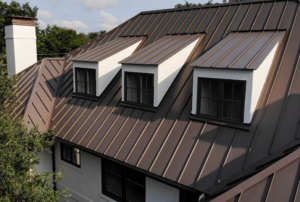
Standing seam metal has become increasingly popular on residential properties, particularly among homeowners looking beyond the traditional replacement cycle of asphalt shingles.
Rather than using exposed fasteners throughout the roof field, standing seam panels connect through raised seams with concealed fastening systems.
The result is a clean, contemporary appearance and a highly durable roofing assembly.
How Does Standing Seam Handle Texas Weather?
Standing seam metal performs extremely well against many of the conditions we experience in North Texas. It doesn’t deteriorate from UV exposure in the same way asphalt-based roofing materials do, and a properly designed and installed standing seam system can provide excellent resistance to wind, water, and extreme temperatures.
Metal can also offer significant longevity, with a properly installed system potentially remaining in service for several decades. However, not all standing seam roofs are created equal.
One detail homeowners should pay particular attention to is the finish applied to the metal. Architectural metal panels are available with different coating systems, most commonly PVDF (polyvinylidene fluoride) and SMP (silicone-modified polyester) finishes. Premium PVDF finishes are particularly well known for resisting fading and chalking and retaining their color through years of intense UV exposure—an important consideration under the Texas sun.
The finish is only one part of the equation. When comparing standing seam proposals from different roofing contractors, it’s important to understand what metal is being proposed, its thickness or gauge, how the panels are fabricated, the type of finish or coating, how the panels are attached, how seams are formed, and how critical details such as valleys, transitions, penetrations, and flashing will be handled.
Two proposals may both say “standing seam metal roof,” while specifying very different materials and installation methods. Those differences can have a significant impact on the roof’s long-term performance and appearance.
Hail deserves a more nuanced discussion as well. Severe hail can leave cosmetic dents or markings in metal panels without necessarily compromising the roof’s ability to shed water. Because insurance policies may distinguish between cosmetic and functional damage to metal roofing, homeowners considering a metal roof should understand how their policy addresses cosmetic damage and discuss available coverage with their insurance professional.
Ultimately, the longevity of a standing seam roof depends on more than simply choosing metal. The metal itself, its finish, fabrication, system design, and quality of installation all play a role in how the roof looks and performs decades down the road.
Best suited for: Homeowners prioritizing longevity, a clean architectural appearance, and reduced reliance on frequent roof replacement.
So, Which Roofing Material Is Best for a Texas Home?
There isn’t a universal answer.
For one homeowner, a quality architectural asphalt shingle may provide exactly the right balance of appearance, performance, and budget.
Another homeowner may be willing to invest more upfront in stone-coated steel or standing seam metal because they want to reduce the likelihood of replacing the roof again in the foreseeable future.
For a custom or architecturally significant home, concrete tile, synthetic slate, or natural slate may make the most sense.
That’s why we encourage homeowners to think beyond simply asking, “What’s the best roofing material?”
A better question is:
“Which roofing system makes the most sense for my home, my priorities, and how long I plan to own it?”
The Material Is Only Part of the Roofing System
There’s one final consideration that’s easy to overlook when comparing roofing materials: the quality of the installation.
You can purchase one of the best roofing products available and still experience problems if it’s installed incorrectly.
Underlayment, ventilation, flashing, valleys, penetrations, fastening methods, manufacturer specifications, roof geometry, and dozens of other details influence how the finished roof performs.
That’s particularly important with specialty systems such as slate, tile, synthetic roofing, standing seam metal, and stone-coated steel, where installation methods can differ significantly from conventional asphalt shingles.
After more than 30 years of roofing in North Texas, we’ve learned that choosing a roofing system isn’t simply about finding the best product. It’s about pairing the right material with the right application and installing the entire assembly correctly.
Explore Your Roofing Material Options
A roof is both a major investment and one of your home’s primary lines of defense against North Texas weather. You should understand what you’re buying before making that investment.
Explore our Residential Steep Slope Roofing Material Options to compare asphalt shingles, synthetic roofing, slate, concrete tile, metal, stone-coated steel, and other available systems.
If you’re still unsure which direction makes sense, that’s okay. Our job isn’t to push every homeowner toward the same roofing material. It’s to help you understand the differences, evaluate the tradeoffs, and choose the roofing system that makes the most sense for your home.