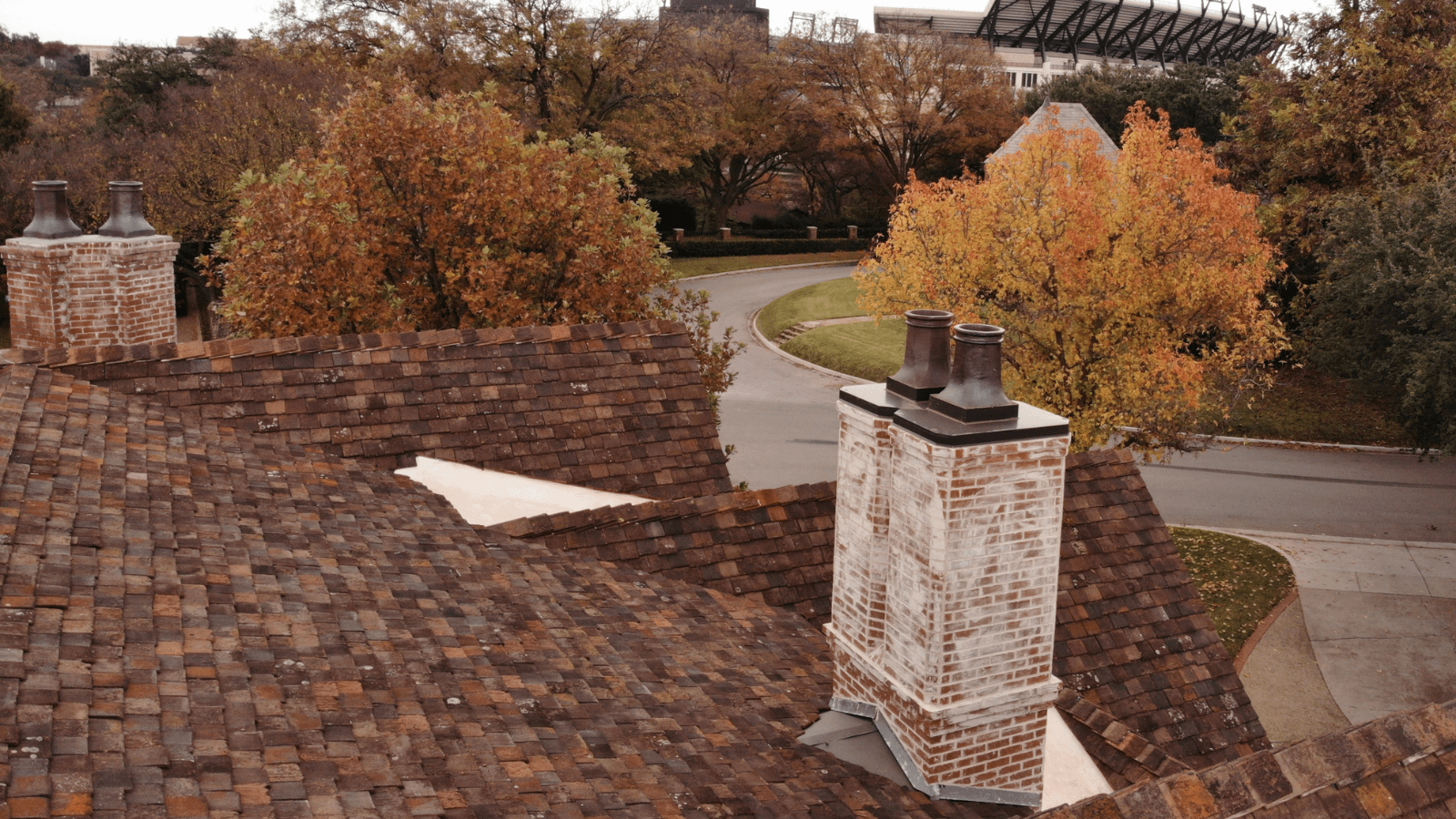
Roof Leak? It Might Not Be Your Roof—Check Your Chimney First
Chimney Leaks vs. Roof Leaks: What Homeowners Need to Know
If your home has a chimney and you’ve got a leak, there’s a strong chance the chimney is the real culprit — not your roofing system. It’s one of the most commonly misdiagnosed issues we encounter, and it costs homeowners thousands of dollars in unnecessary repairs every year.
Over our 37 years of inspecting and repairing roofs across the DFW area, we’ve seen this scenario play out hundreds of times. A homeowner calls about a leak, another contractor replaces the roof, and the leak continues — because nobody looked at the chimney.
At Joe Hall Roofing & Contracting, our mission is to help homeowners make educated, effective decisions about their roofs. This guide will walk you through how chimneys fail, where leaks actually originate, and how we approach long-term solutions that fix the problem the first time.
What you’ll learn here is information most homeowners have never been told — and likely didn’t know to look for.
So You Have a Leak… Start With the Chimney
When water shows up inside your home, the roof gets blamed almost every time. It’s a logical assumption — but it’s frequently wrong.
Chimneys penetrate the roof system, creating transition points where multiple materials meet. These intersections are among the most vulnerable areas on any home. If they aren’t properly built, flashed, sealed, and maintained, water will find a way in — and it often travels far from the original entry point before it shows up on your ceiling.
If your home has a chimney, it should always be the first area inspected when a leak is suspected.
Common Chimney Issues That Cause Leaks
We’re not masons, but after decades of roofing work we’ve become very good at identifying masonry-related problems that lead to water intrusion. Some of the most common issues we see include:
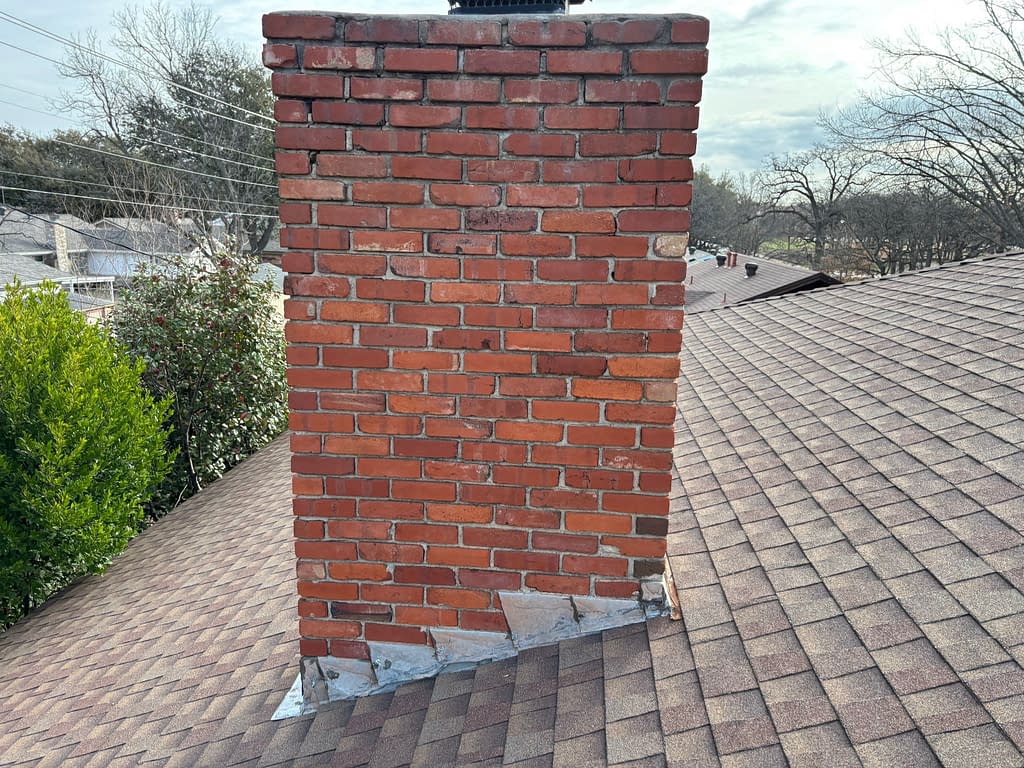
Degraded Mortar Joints
Mortar naturally breaks down over time from weather exposure. As it deteriorates, even small cracks create pathways for water to enter the chimney structure and work its way into your home.
Cracked or Missing Chimney Caps
The cap protects the top opening of your chimney. When it’s damaged, shifted, or missing entirely, water can pour directly into the flue — bypassing every other protection system on the roof.
Gaps, Holes, and Surface Deterioration
Small openings in brick, stone, or stucco are easy to overlook but can allow water to seep in continuously, traveling downward through the structure and eventually appearing inside the home.
When masonry issues are present, we’ll connect you with a trusted masonry professional to handle the structural repairs — that work falls outside our scope — while we manage the roofing-side solution in coordination.
The Way Your Chimney Was Built Matters
Not all chimneys are created equal, and not all chimney designs handle water the same way.
Over the years, architects and builders have approached chimney construction in many different ways — some well-suited to water management, others surprisingly vulnerable. Older homes in particular often lack the waterproofing details that are standard in modern construction.
Factors that influence a chimney’s leak potential include:
- Chimney size, shape, and placement on the roof
- Roof pitch and intersection angles
- Presence or absence of a chimney saddle (cricket)
- Age of construction and quality of prior repairs
- Overhangs and drainage design
Some chimney configurations naturally shed water well. Others create conditions where water pools, backs up, and eventually penetrates.
The most challenging scenario is a chimney built within a roof valley — creating what’s known as a “dead valley,” where water flow is restricted and runoff has nowhere to efficiently go.
These situations require careful design and execution during any repair or reroofing project to ensure water is properly redirected.
Chimney Material Types and Why They Matter
The material your chimney is made of directly affects how it performs, how it ages, and how it must be flashed and waterproofed. Each type presents distinct strengths, vulnerabilities, and roofing integration requirements.
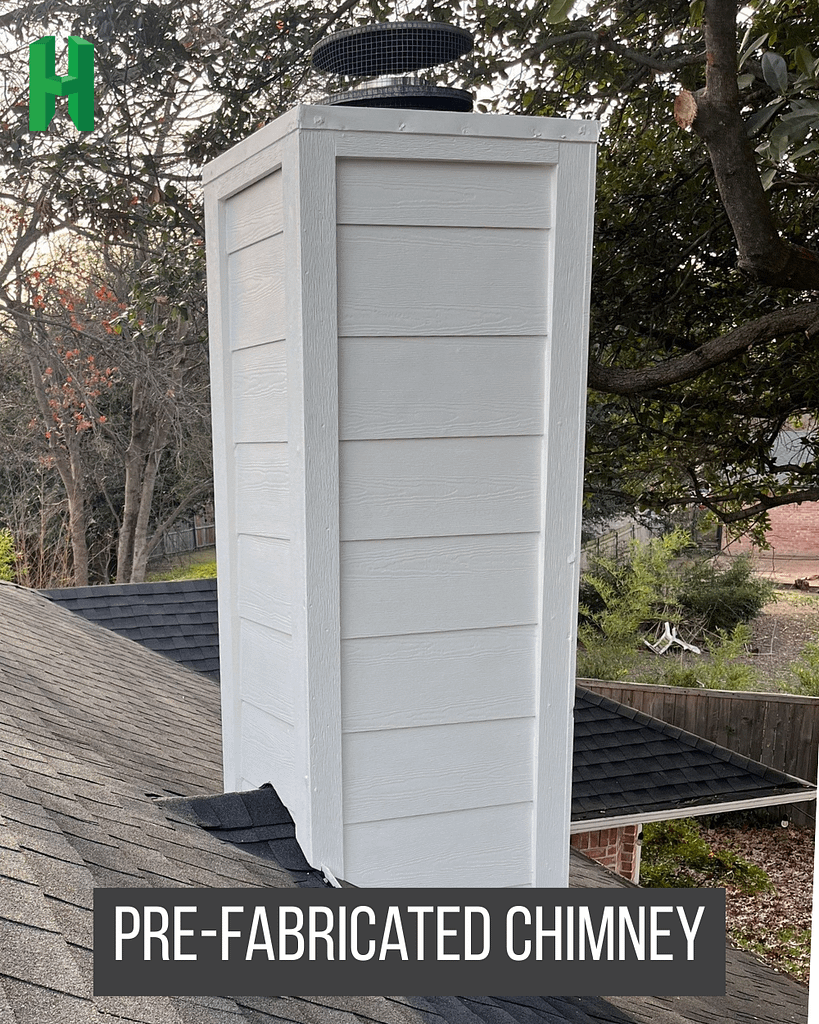
Fiber Cement (Hardi) Siding Chimneys
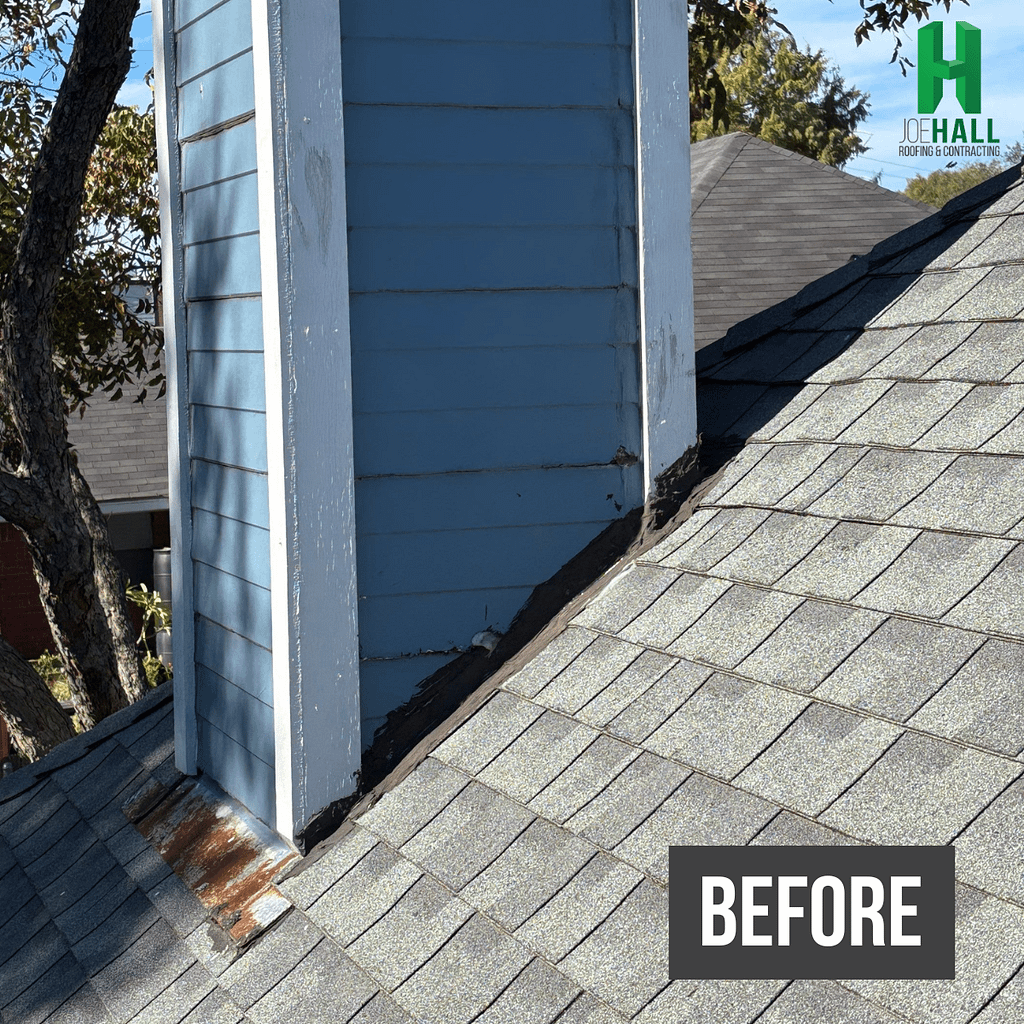
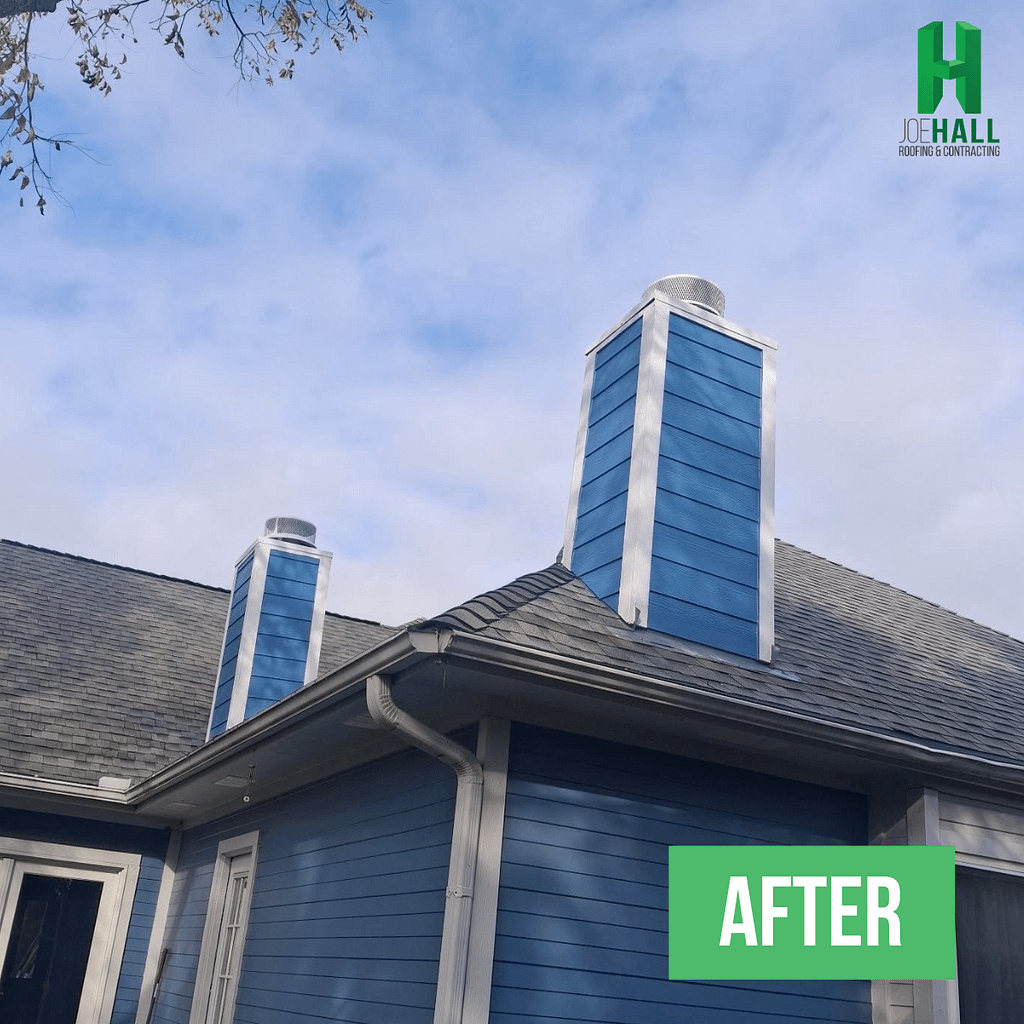
Fiber cement offers improved durability over wood but is not inherently waterproof. These systems depend heavily on sealed joints, quality caulking, and correctly installed flashing. Over time, gaps form at seams and transitions — and without proper integration with the roofing system, even this more resilient material can become a reliable leak source.
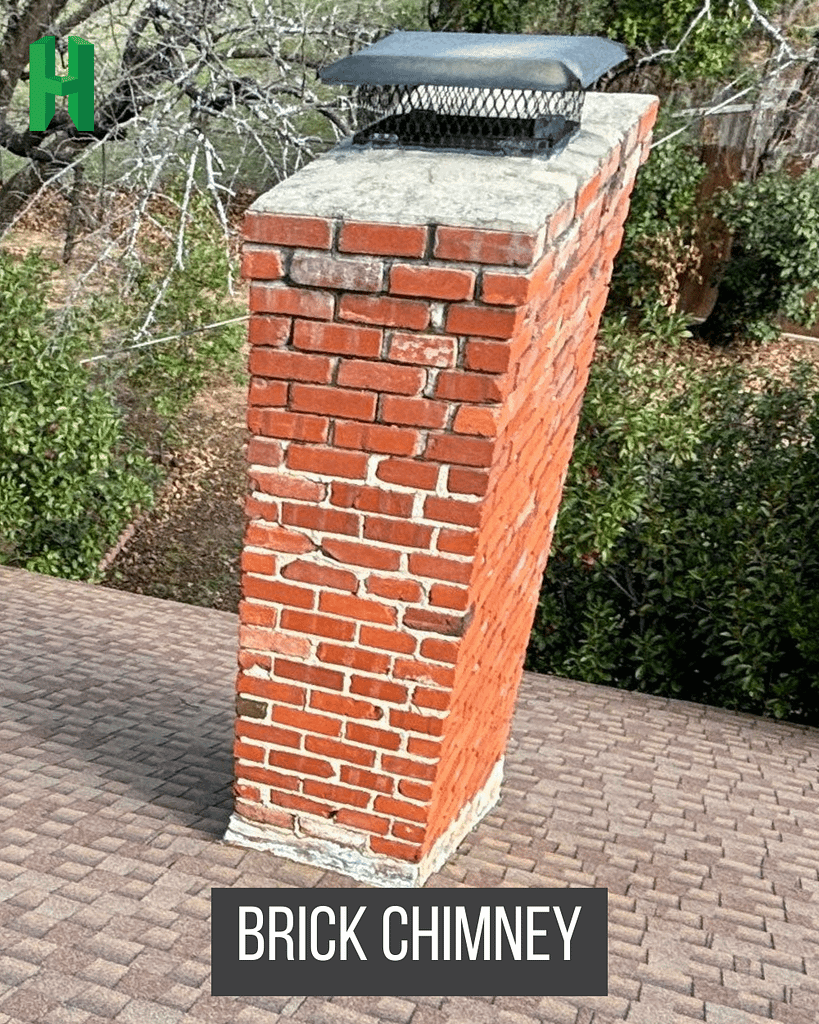
Brick Chimneys
Brick is structurally strong but naturally porous. The mortar joints are what keep water out — and over time, those joints crack, erode, and wash away. Without proper maintenance and sealing, moisture works through the masonry and into the home. Flashing at the base is equally critical; improper installation here is one of the most common failure points we encounter.
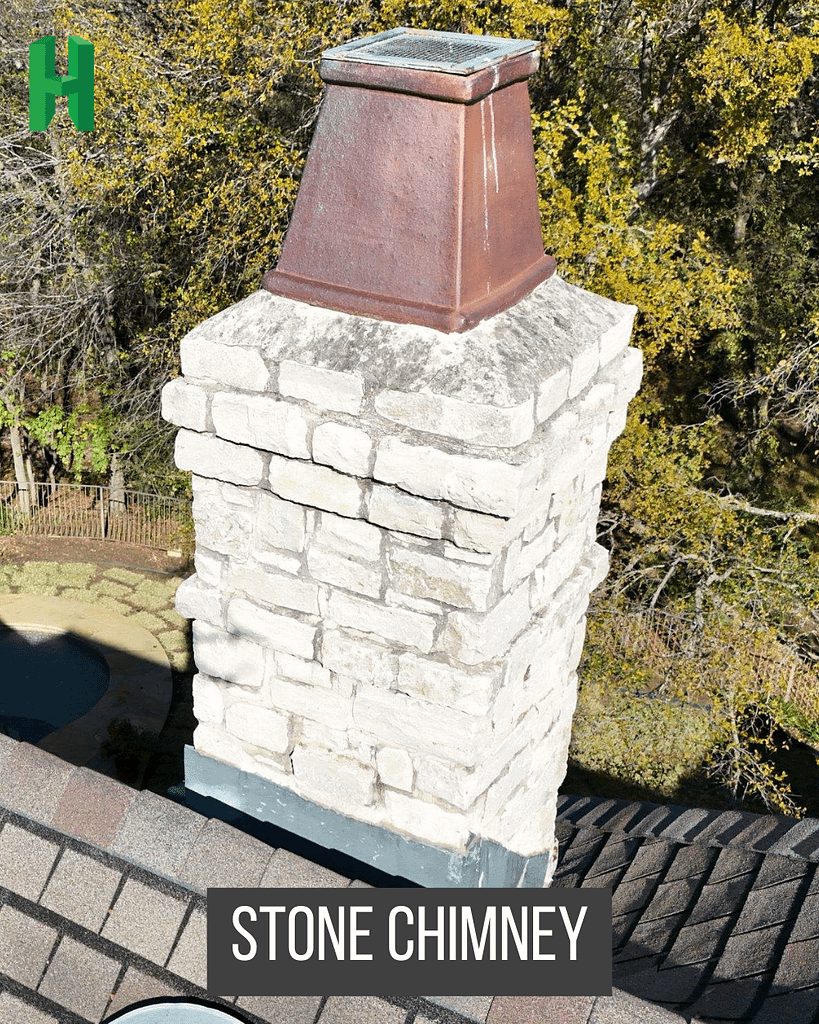
Stone Chimneys (Full Masonry and Veneer)
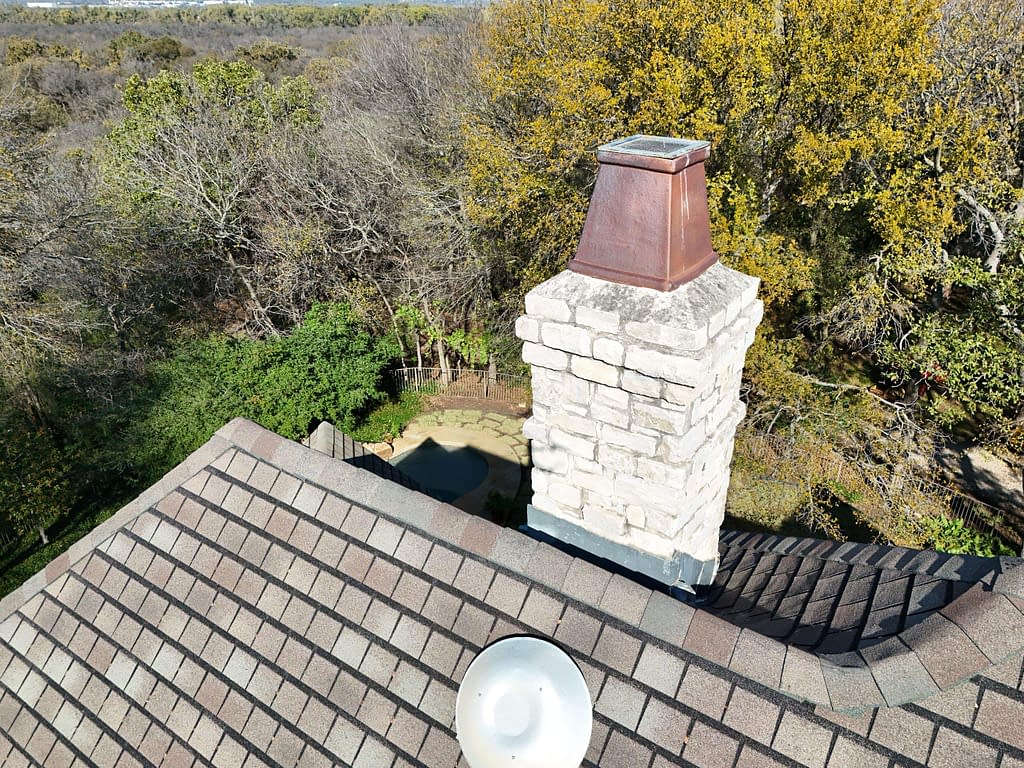
Full masonry stone chimneys are highly durable but complex to repair. Veneer systems are visually striking but require proper drainage and waterproofing behind the stone surface. If not installed correctly, water becomes trapped behind the veneer and causes hidden damage that often isn’t discovered until it’s significant.
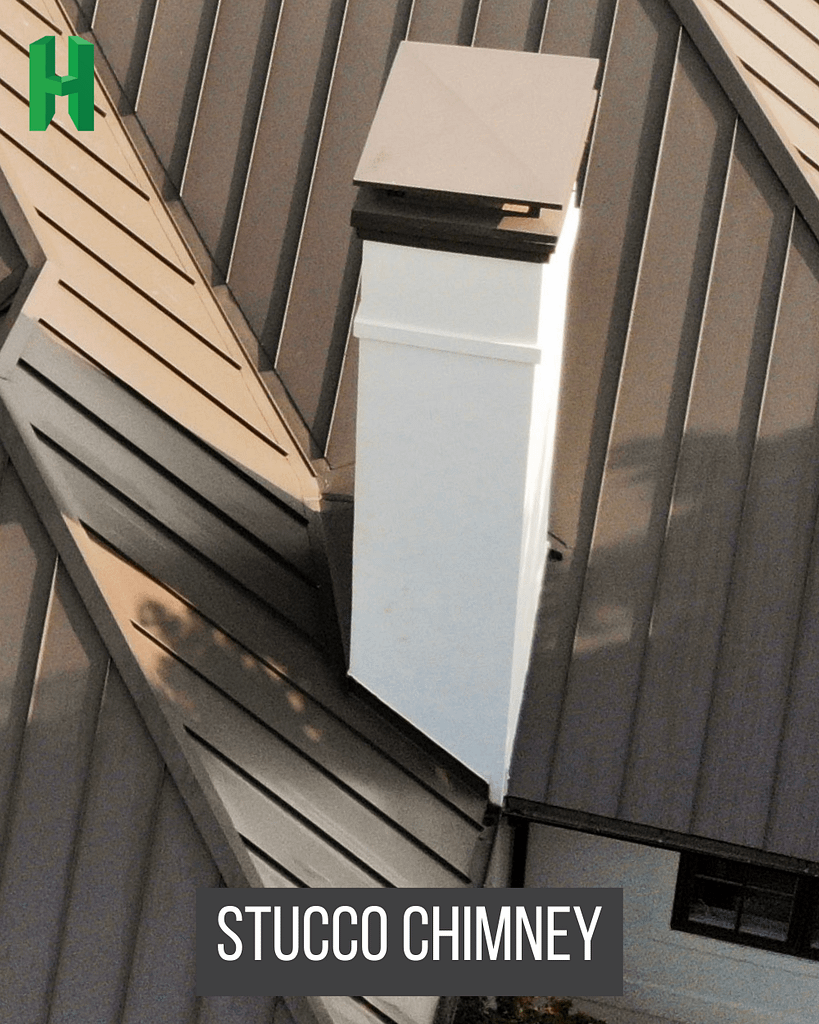
Stucco Chimneys (Masonry and Framed Systems)
Stucco can be applied over solid masonry or wood-framed structures. Either way, cracks will develop over time — and once water gets beneath the surface, it can cause concealed damage that’s invisible until it’s a serious problem. Proper sealing, maintenance, and flashing are essential throughout the life of a stucco chimney.
Each chimney type interacts differently with your roofing system and requires a material-specific approach to flashing, sealing, and long-term waterproofing.
Chimney Flashing: Where Most Problems Occur
Flashing is the metal system that seals the connection between your chimney and your roof. Its job is to direct water away from this critical transition and prevent intrusion into your home. It is one of the most important areas on your entire roof — and one of the most commonly failed.
In some cases, flashing was originally installed correctly and has simply worn out over time. More often, we find flashing that was improperly installed from the start, missing key components, damaged by weather or previous repair work, or simply too narrow or too shallow to do its job effectively.
When flashing fails, water enters directly at the chimney base and travels into the home — often appearing on a ceiling far from where it actually got in.
Not All Flashing Materials Are Created Equal
The metal used in your flashing has a significant impact on its lifespan and performance. Common options include galvanized steel, paint grip steel, copper, and stainless steel. Each has its place, but not all are compatible with every roofing system.
Using the wrong metal combination can actually accelerate deterioration. Certain pairings create galvanic corrosion — a chemical reaction that breaks down the flashing from within. This is especially important on slate and tile roofs, where material compatibility is critical to long-term performance.
Signs Your Flashing Is Deteriorating
Even properly installed flashing will eventually show wear, particularly when lower-grade materials were used.
Watch for:
- Rust forming on the metal surface
- Paint fading, peeling, or chipping
- Visible gaps or separation at seams
- Staining or discoloration around the chimney base
Standard galvanized flashing will rust over time. If it’s been spray-painted or coated as a quick fix, that finish is temporary — and as it breaks down, the underlying metal becomes exposed. Paint grip steel offers better coating adhesion, while pre-finished metal options deliver long-term durability and a clean, consistent appearance.
Gauge and Thickness Matter
Beyond material type, metal thickness — measured by gauge — affects how flashing performs under real-world conditions. Thinner metals are easier to install but more prone to bending, warping, and early failure. Heavier-gauge metals provide greater strength and resistance to long-term environmental wear, maintaining a watertight seal for significantly longer.
Your Joe Hall Roofing consultant will walk you through material and gauge recommendations specific to your chimney during your repair or replacement estimate.
Proper Flashing Is a System, Not a Single Piece
A correctly flashed chimney isn’t one strip of metal tucked under a shingle. It’s a layered, integrated system that typically includes step flashing woven into the roofing material at the sides, counter flashing embedded or sealed into the chimney structure above, and a properly overlapping design that sheds water at every point.
When any component of this system is missing or incorrectly installed, the entire assembly is compromised — often in ways that aren’t visible until a significant leak develops.
At Joe Hall Roofing & Contracting, we take a system-based approach to every chimney we flash. The right materials, installed in the right sequence, in a way that promotes proper water flow and long-term performance.
What You Don’t See: Underlayment and Ice & Water Protection
Flashing handles the visible layer of protection. What lies beneath it is equally important — and far too often, it’s simply not there.
At the base of every chimney we work on, we install a waterproof ice and water shield membrane to create a secondary barrier against moisture. This self-adhering membrane seals around nails and penetrations, so even if the outer flashing system is ever compromised, there’s a critical backup layer preventing water from entering the home.
In many of the leaking roofs we inspect, the flashing didn’t just fail — there was never any waterproofing layer beneath it to begin with.
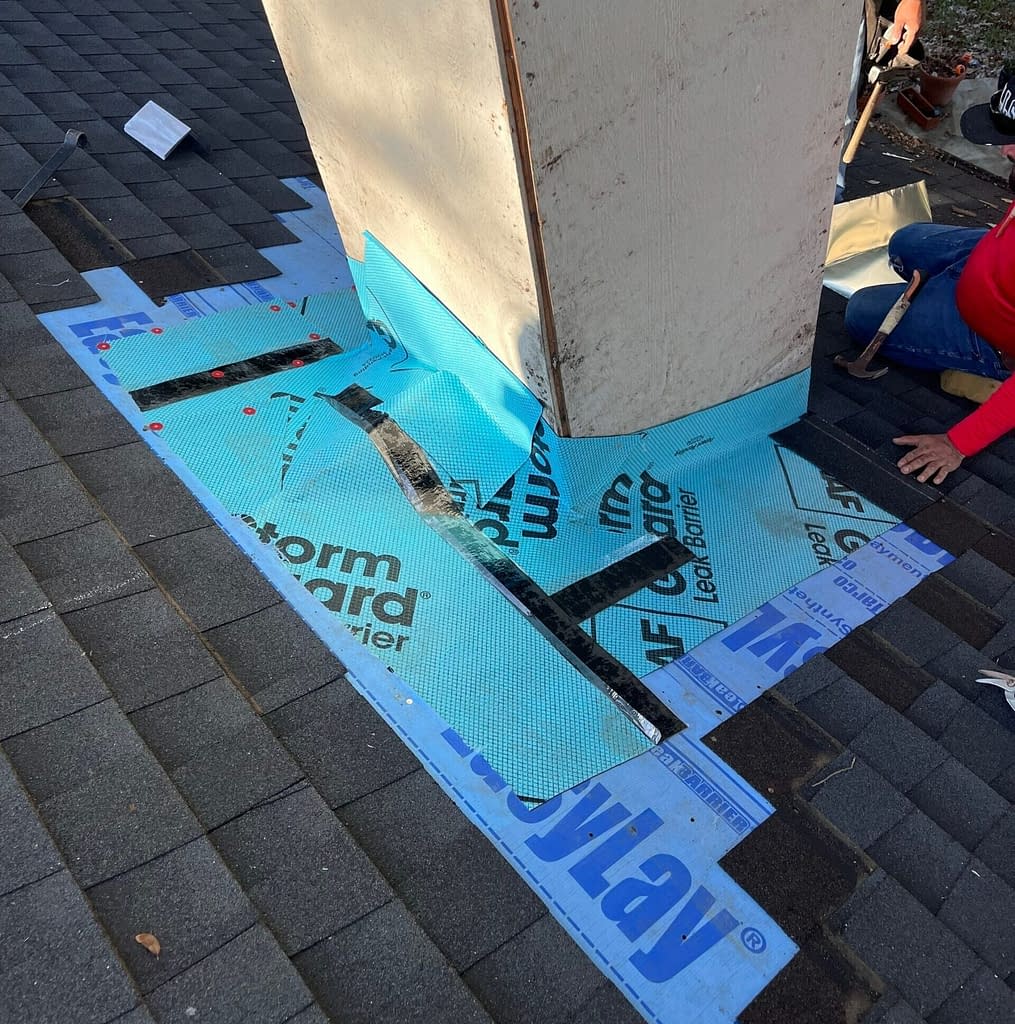
This layer matters because it:
- Reduces risk of future leaks if flashing or roofing is ever compromised
- Provides a secondary line of defense against water intrusion
- Seals around fasteners and penetrations
- Protects vulnerable roof-to-chimney transitions
At Joe Hall Roofing & Contracting, installing new ice and water membrane around every chimney is non-negotiable — regardless of whether an existing layer is present. You might be surprised how often we tear off a roof and find this step was skipped entirely. We never skip it. It’s part of doing the job the right way.
The JHR Way: Re-flashing Your Chimney Right
Our commitment to the JHR Way means we always leave your chimney better than we found it — even when the chimney isn’t the primary source of the current leak. A proactive approach now prevents a costly callback later.
Our standard chimney process includes:
- Evaluating all existing flashing systems
- Removing compromised or inadequate materials
- Installing proper step and counter flashing
- Ensuring watertight integration with the roofing system
- Building a chimney cricket to divert water away from the uphill side of the chimney (required by code for chimneys over 30 inches wide)
We’ve seen how disruptive and frustrating chimney-related leaks can be. Our goal is to eliminate that problem at its source — not patch it until it comes back.
Repair and Rebuild Options
Beyond reflashing during a roof replacement, we offer select chimney repair solutions depending on the material, condition, and scope of work involved. These may include targeted chimney repairs, partial chimney rebuilds where applicable, and waterproofing solutions at the roof-to-chimney connection.
Wood-framed chimney chases are often more straightforward to repair or rebuild. Stone and full masonry chimneys may require specialized masonry work — in those cases, we’ll coordinate with the right professionals while managing the roofing scope on our end.
Contact Us to discuss your chimney situation →
Our Recommendation: Don’t Assume It’s Your Roof
Before committing to a full roof replacement, the source of the leak must be properly diagnosed. In many cases — more than most homeowners realize — addressing chimney issues resolves the problem entirely, without any roofing work at all.
At Joe Hall Roofing & Contracting, we provide honest assessments. If your chimney is the problem, we’ll tell you. If your roof is the problem, we’ll tell you that too. Our job is to identify what your home actually needs — not to sell you work it doesn’t.
Schedule a Professional Inspection
If you’re dealing with a leak and your home has a chimney, don’t guess — get a professional set of eyes on it.
Our team will identify the true source of the leak, evaluate your chimney structure and materials, assess the condition of your flashing system, and give you clear, actionable next steps with no pressure and no obligation.